
COMPANY NEWS
Buddhist vs Taoist Funeral Traditions in Singapore: What Families Should Know
Buddhist and Taoist funerals are familiar parts of Singapore’s diverse funeral traditions.
At first glance, the two may appear similar. Both can include a wake, prayers, chanting, offerings and religious rituals.
However, Buddhist and Taoist funerals do not follow exactly the same beliefs or practices.
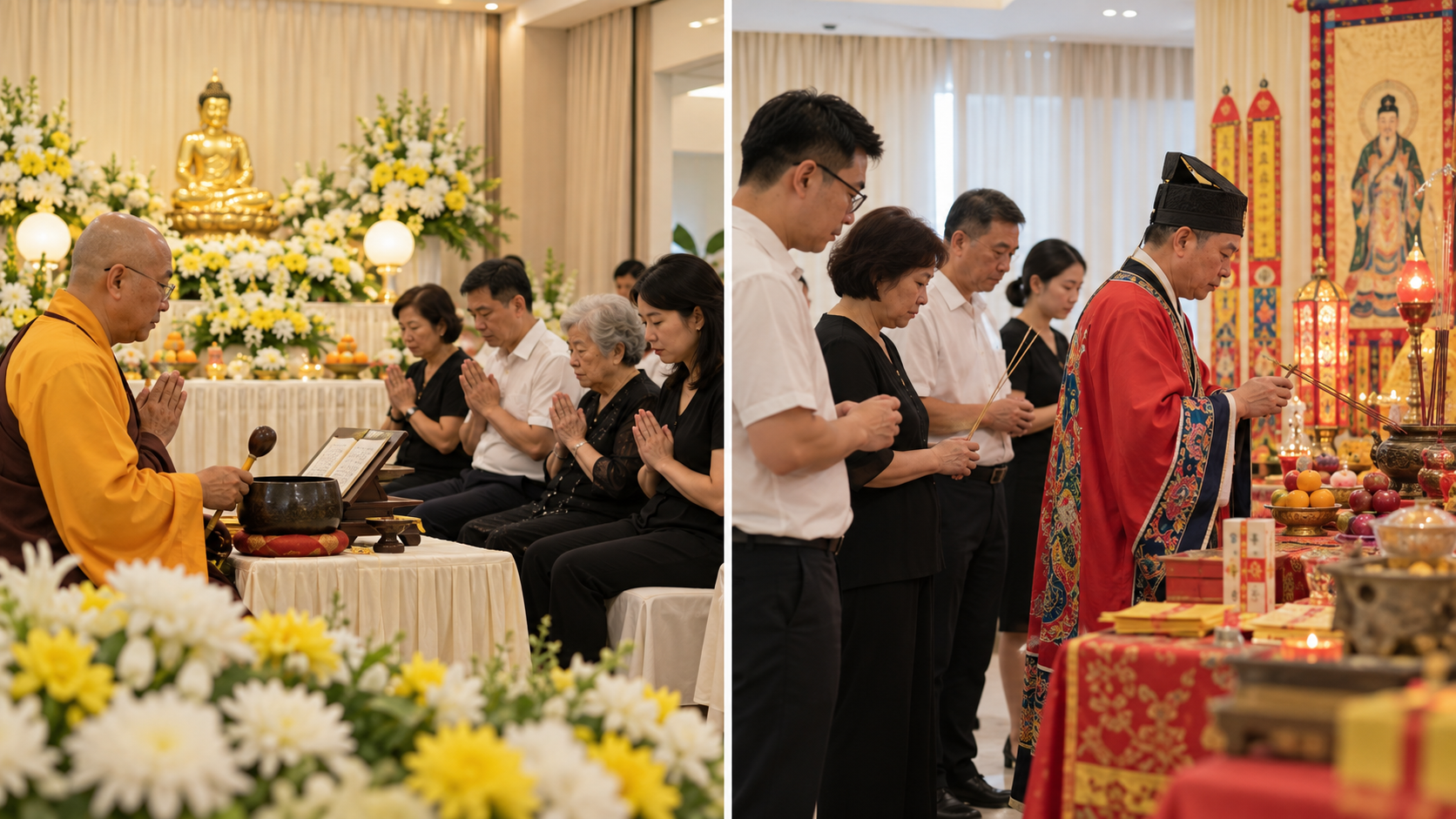
The religious leaders involved can differ. So can the prayers, rituals, ceremonial items and meaning behind them.
Family traditions also matter. Not every Buddhist or Taoist family follows the same funeral format, and some may observe customs differently based on their religious background and personal wishes.
Understanding these differences can help families make more informed decisions when arranging a funeral.
What Are Religious Funeral Services?
Religious funeral services incorporate beliefs and traditions that are meaningful to the person who has passed away and their family.
Depending on the religion, these arrangements may involve:
- prayers or chanting
- religious leaders
- ceremonial rites
- offerings
- altar arrangements
- religious items
- wake ceremonies
- burial or cremation traditions
The exact arrangements depend on the family’s beliefs and the traditions they wish to follow.
Therefore, families should explain their religious requirements clearly when speaking with a funeral provider.
Budget Casket Company currently provides separate Buddhist and Taoist funeral packages rather than treating them as the same service.
Are Buddhist and Taoist Funerals the Same?
No.
Although there may be visual similarities between some Buddhist and Taoist funerals, the religious beliefs behind the ceremonies are different.
A simple way to understand the distinction is:
| Buddhist Funeral | Taoist Funeral | |
|---|---|---|
| Religious leader | Buddhist monks or practitioners | Taoist priests |
| Common elements | Chanting, prayers, offerings and Buddhist rites | Taoist prayers, chanting, offerings and ceremonial rites |
| Religious focus | Buddhist teachings about life, death, compassion and impermanence | Taoist beliefs and rituals associated with the deceased’s spiritual journey |
| Variation | Can vary by Buddhist tradition and family | Can vary by family tradition and specific Taoist practices |
| Wake | Often forms part of the funeral | Often forms part of the funeral |
| Final arrangements | Cremation or burial according to family and religious preferences | Cremation or burial according to family and religious preferences |
This comparison is only a general guide.
Religious practice can differ from one family to another. Therefore, families should confirm the appropriate rites with their religious representative rather than assuming every funeral follows one standard format.
Buddhist Funeral Traditions in Singapore
Buddhist funerals generally focus on showing respect for the deceased while drawing on Buddhist teachings and practices.
The exact funeral can differ depending on the Buddhist tradition followed by the family.
Budget Casket Company’s current Buddhist funeral service includes arrangements for the wake, care of the deceased, a casket, logistics and cremation coordination alongside the religious elements of the funeral.
Families can explore the company’s Buddhist Funeral Services for its current package information.
Buddhist Chanting and Prayers
Chanting commonly forms part of a Buddhist funeral.
Monks or other Buddhist religious practitioners may lead prayers and chanting during the wake or funeral ceremony.
These moments give relatives time to gather, reflect and honour the person who has passed away.
Buddhist Funeral Wake
A wake gives relatives and friends an opportunity to visit the family and pay their respects.
Religious ceremonies may take place at different times during the wake.
Meanwhile, the family can spend time together, receive visitors and remember their loved one.
Offerings and Religious Items
Depending on the family’s tradition, a Buddhist funeral may include incense, flowers, religious objects and other appropriate offerings.
The exact items should reflect the family’s beliefs rather than being added simply because they are commonly associated with a Buddhist funeral.
The Final Farewell
The funeral eventually moves toward the final arrangements.
Depending on the family’s beliefs and preferences, this may involve cremation or burial.
The funeral director can coordinate the practical arrangements while the family’s religious representatives guide the spiritual aspects.
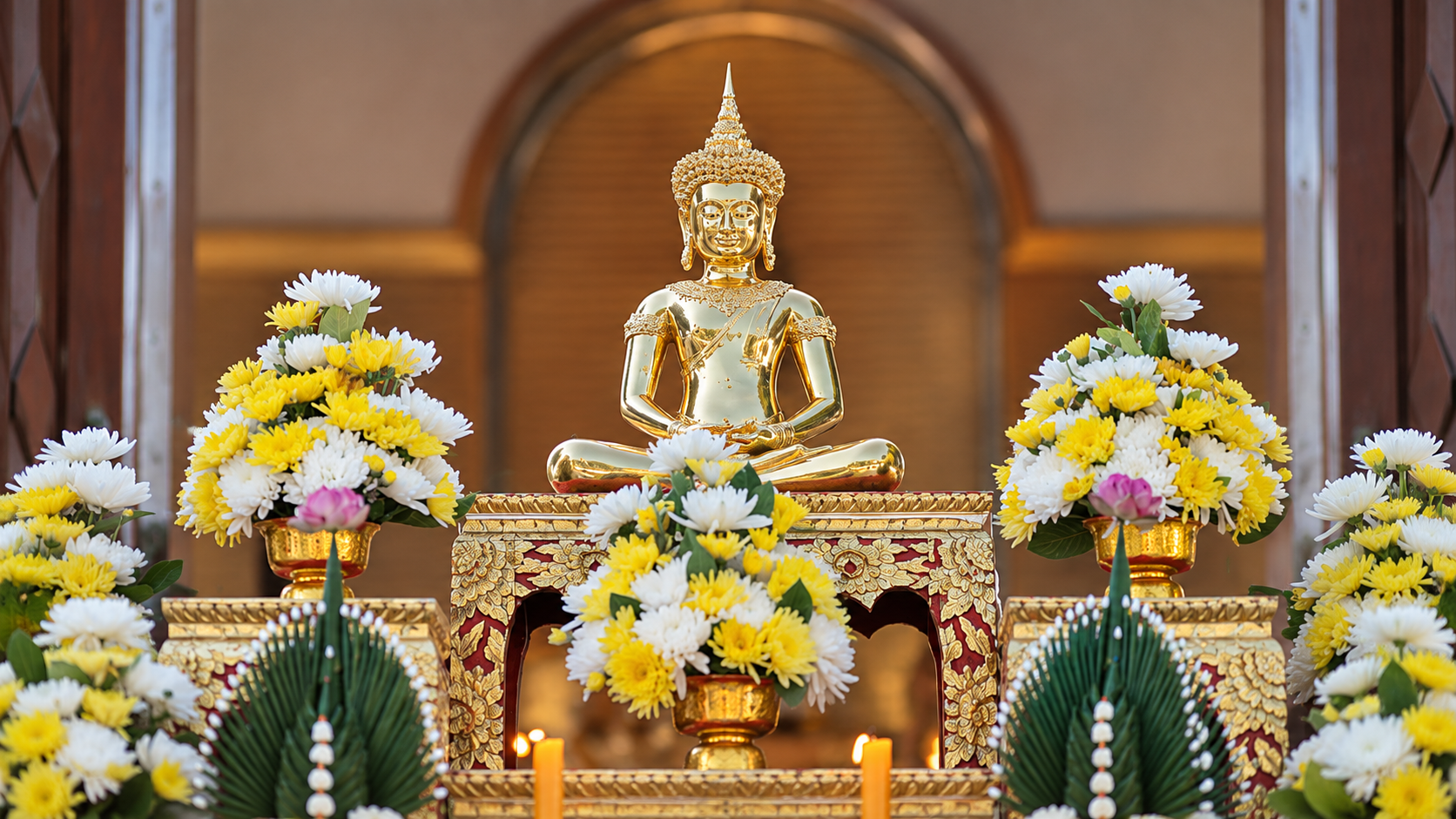
Taoist Funeral Traditions in Singapore
Taoist funerals follow a different religious tradition.
They can include prayers, chanting, symbolic offerings and rites conducted by Taoist priests.
The exact ceremonies can vary according to the family’s traditions and requirements.
Budget Casket Company’s current Taoist funeral package includes the wake setup, Taoist funeral decorations, casket and logistics arrangements as part of its wider funeral service.
Families can view the company’s Taoist Funeral Services to understand its current arrangements.
Taoist Priests and Religious Rites
Taoist priests may lead the religious ceremonies throughout the funeral.
These rites form an important part of the farewell for families who follow Taoist traditions.
For that reason, the family should discuss its requirements early with both the priest and funeral provider.
Offerings and Ceremonial Items
Offerings and ceremonial items may also form part of a Taoist funeral.
However, families should not assume that every Taoist funeral requires exactly the same setup.
Instead, the religious arrangements should reflect the practices the family wishes to observe.
The Taoist Funeral Wake
As with many Buddhist funerals, the wake gives relatives and friends a place to pay their respects.
However, Taoist ceremonies during the wake can differ from Buddhist chanting and prayers.
This is one reason why choosing the correct religious package matters.
Final Funeral Rites
The final day may include additional religious rites before the deceased proceeds to cremation or burial.
A funeral director can coordinate the practical side of the final journey while Taoist priests guide the religious ceremonies.
Why Can Buddhist and Taoist Funerals Look Similar?
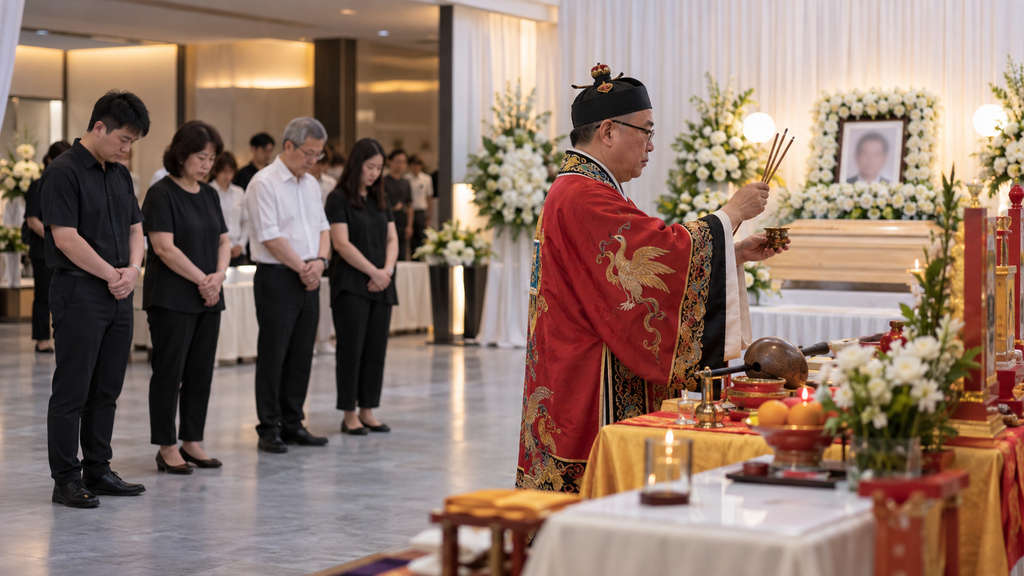
Families sometimes become confused because certain visible elements can appear in both traditions.
For example, both funerals may involve incense, chanting, offerings and a wake.
However, similar objects or actions do not necessarily carry the same religious meaning.
The person leading the rites also differs.
Buddhist funerals commonly involve Buddhist monks or practitioners, while Taoist funeral rites involve Taoist priests.
Therefore, families should focus on the beliefs and traditions behind the ceremony rather than judging the religion only by how the funeral looks.
Religious Traditions Can Also Vary Between Families
Another important point is that there is no single funeral format followed by every Buddhist or Taoist family in Singapore.
Family traditions can influence the arrangements.
So can the deceased’s own beliefs and preferences.
For this reason, two Buddhist funerals may not look identical. The same applies to two Taoist funerals.
Instead of following a generic checklist, families should begin by asking:
What religious practices were important to our loved one and our family?
That question can provide much clearer guidance.
What Does a Buddhist or Taoist Funeral Package Include?
Funeral packages can make the planning process easier by grouping several arrangements together.
Depending on the provider and religion, a package may cover the wake setup, casket, transportation, care of the deceased, religious arrangements, flowers, cremation coordination and other practical services.
However, package inclusions can differ.
Families should therefore check the quotation carefully before confirming the service.
Budget Casket Company’s current funeral package range lists Buddhist and Taoist services separately and states that its packages aim to provide clear information about what is and is not included.
You can direct readers to Budget Casket Company’s Funeral Packages for the current options.
How to Plan a Buddhist or Taoist Funeral
The planning process becomes easier when families work through the arrangements in stages.
1. Confirm the religious tradition.
Start by confirming whether the deceased followed Buddhist or Taoist beliefs. If you are unsure about specific rites, speak with relatives who understand the family’s traditions.
2. Speak with the appropriate religious representative.
A Buddhist monk or Taoist priest can explain the rites that are appropriate for the family’s religious practice.
3. Tell the funeral provider about your requirements.
Do this early. It gives the funeral team time to coordinate the venue, religious arrangements, wake setup and final journey.
4. Review the funeral package carefully.
Ask what is included, what costs extra and whether the package covers the religious arrangements your family needs.
5. Confirm the wake and final arrangements.
Discuss the wake duration, religious ceremonies, cremation or burial and any personal wishes the family wants to include.
This step-by-step approach helps reduce confusion during an already emotional period.
Why Religious Customs Matter During a Funeral
Religious traditions can provide comfort and familiarity after a loss.
Prayers and ceremonies give families a structure for saying goodbye.
They also create moments when relatives and friends can gather, reflect and support one another.
Most importantly, following the person’s beliefs can help the family feel confident that they are honouring their loved one respectfully.
That does not mean every ceremony must be elaborate.
What matters is understanding which customs are meaningful to the family.
Can a Buddhist or Taoist Funeral Be Personalised?
Yes.
Following religious traditions does not prevent families from including personal details.
For example, photographs, flowers, memorial displays or meaningful belongings can help reflect the person’s life.
However, families should make sure personal additions remain appropriate for the religious setting.
When in doubt, discuss the idea with the religious practitioner and funeral director.
Planning Ahead Can Clarify Religious Wishes
Families do not always know which religious rites a loved one would have wanted.
This uncertainty can make funeral decisions harder.
Funeral pre-planning provides an opportunity to discuss these wishes earlier.
Someone may choose to record whether they prefer a Buddhist or Taoist funeral, which traditions matter to them and whether they prefer cremation or burial.
Budget Casket Company’s Funeral Pre-Planning in Singapore guide explains how documenting preferences can reduce uncertainty for family members later.
Choosing the Right Religious Funeral Provider
Experience with the family’s religion matters when choosing a funeral provider.
A provider should understand that Buddhist and Taoist funerals are not interchangeable.
They should also be able to coordinate effectively with monks, Taoist priests and the family.
Clear pricing matters too.
Before confirming a package, families should understand the included services and any additional costs.
Good communication makes it easier for everyone involved to work together.
How Budget Casket Company Supports Buddhist and Taoist Families
Budget Casket Company currently offers dedicated Buddhist and Taoist funeral packages in Singapore. Both packages cover practical funeral arrangements while allowing religious elements to form part of the farewell.
The funeral team can help families coordinate the wake, casket, transportation and final arrangements while working alongside the relevant religious practitioners.
This allows family members to spend less time managing logistics and more time supporting one another.
Frequently Asked Questions About Buddhist and Taoist Funerals
Are Buddhist and Taoist funerals the same?
No. They follow different religious traditions, although certain visible elements may appear similar. Buddhist funerals may involve monks and Buddhist chanting, while Taoist funerals commonly involve Taoist priests and Taoist rites.
Can Buddhist and Taoist funerals both include chanting?
Yes, chanting can appear in both. However, the religious content and meaning behind the chanting differ.
Who conducts a Buddhist funeral?
Depending on the family’s tradition, Buddhist monks or other appropriate Buddhist practitioners may lead the religious ceremonies.
Who conducts a Taoist funeral?
Taoist priests normally conduct the Taoist religious rites.
Can families customise the funeral arrangements?
Yes. Families can discuss personal preferences with the funeral provider while ensuring that important religious practices remain respected.
Should we speak with a monk or Taoist priest before planning?
It can be helpful, especially when the family is unsure about the required rites. Religious practitioners can advise on traditions while the funeral director handles the practical arrangements.
Can families plan religious funeral wishes in advance?
Yes. Pre-planning can record religious preferences and give family members clearer guidance later.
Respecting Beliefs While Saying Goodbye
Buddhist and Taoist funerals may share certain visible elements, but each follows its own religious traditions and meaning.
Understanding those differences can help families avoid assumptions and make arrangements with greater confidence.
Start with the person’s beliefs.
Then speak with the appropriate religious representative and funeral provider.
Most importantly, remember that the purpose of these traditions is not simply to follow a checklist.
They help families honour a loved one, preserve meaningful beliefs and come together during a difficult time.
With thoughtful planning and respectful guidance, both Buddhist and Taoist funerals can provide a meaningful and dignified farewell.